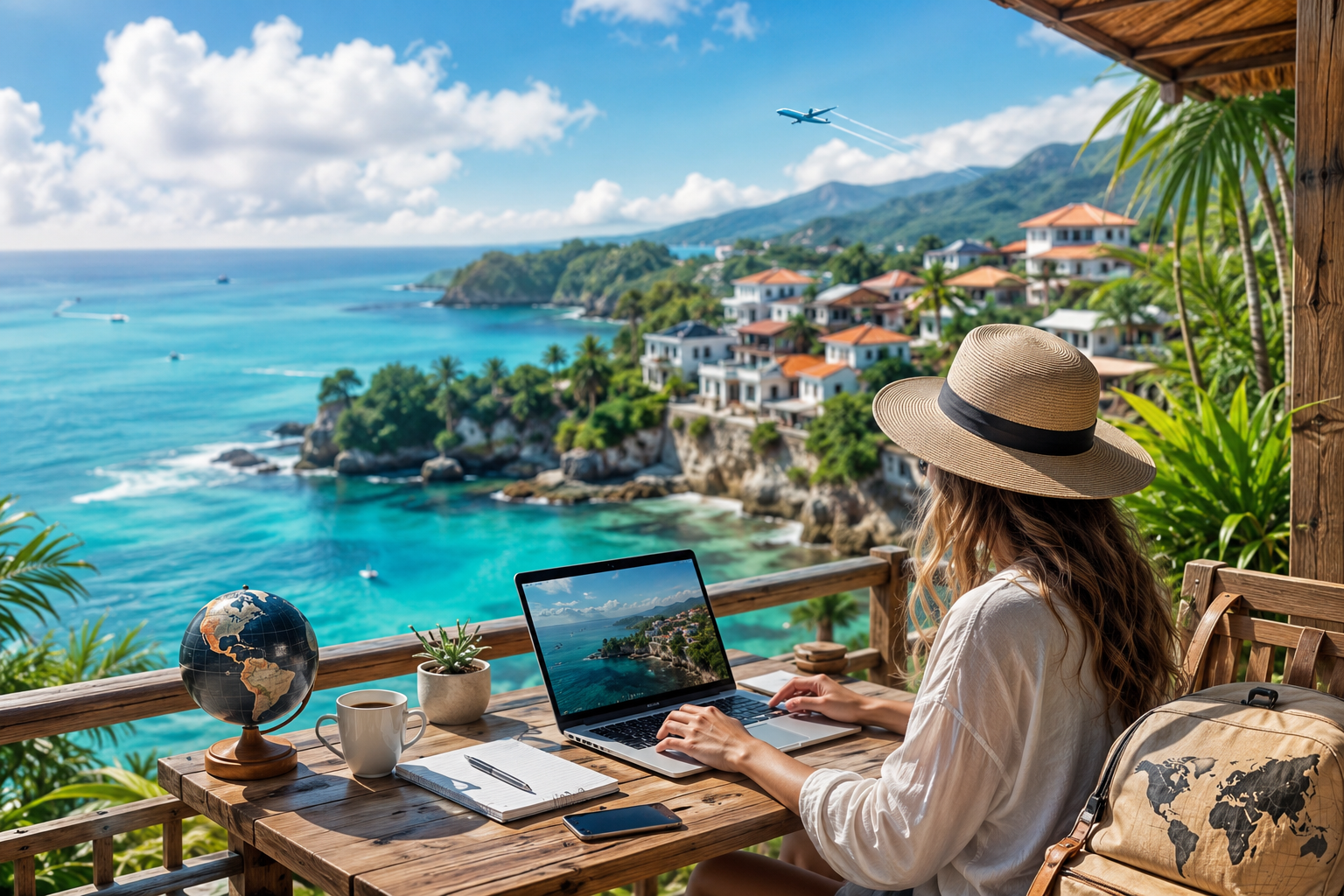
few years ago, working remotely from a beachside café in Portugal or a mountain town in Thailand sounded like a fantasy reserved for influencers and tech founders. In 2026, it has become a real lifestyle choice for millions of people around the world.
The rise of the Digital Nomad Visa has completely changed how professionals think about work, travel, and freedom. More countries are now competing to attract remote workers because digital nomads spend money locally, contribute to tourism, and often stay longer than traditional travelers.
Today, developers, writers, designers, marketers, consultants, online teachers, and even corporate employees are actively searching for the best Remote Work Visa opportunities that allow them to legally live abroad while working online.
What makes this movement even more exciting is accessibility. You no longer need to be wealthy to join the remote work revolution. Many Digital Nomad Countries now offer affordable visa programs with low income requirements, tax incentives, and simple online applications.
This guide explores the best digital nomad visa programs for remote workers in 2026, including visa costs, eligibility rules, income requirements, tax benefits, and the cheapest destinations for freelancers and entrepreneurs.
If you’ve ever dreamed of waking up in a new country while still earning online income, this may be the year you finally make it happen.

What Is a Digital Nomad Visa?
A Digital Nomad Visa is a legal residency permit that allows remote workers, freelancers, and online business owners to live in another country while working for foreign clients or companies.
Unlike tourist visas, a remote work visa gives you legal permission to stay longer — often from 6 months to 2 years — without violating immigration laws.
Most countries offering these visas want proof that:
- You work remotely
- Your income comes from outside the host country
- You meet minimum income requirements
- You have health insurance
- You possess a clean criminal record
The biggest advantage is stability. Instead of doing risky visa runs every few months, digital nomads can legally settle in a country and enjoy local life without immigration stress.
Why Remote Work Visa Programs Are Trending Worldwide
The remote work economy exploded after companies realized employees could work effectively from anywhere. Governments quickly noticed the opportunity.
Countries now compete aggressively to attract digital professionals because remote workers:
- Spend money on housing and food
- Boost tourism revenue
- Support local businesses
- Bring foreign income into the economy
- Often stay longer than tourists
According to global remote work trends, millions of workers are expected to transition into location-independent careers by 2027.
Some governments have even simplified application processes to attract younger professionals and freelancers.
You can explore official immigration information through the Estonia Digital Nomad Visa Official Portal and the Portugal Immigration and Borders Service.
Best Digital Nomad Visa Programs for Remote Workers in 2026
Below are the most exciting and practical destinations for remote workers this year.
Table: Top Digital Nomad Visa Countries in 2026
| Country | Minimum Monthly Income | Visa Duration | Average Cost of Living | Tax Benefits | Best For |
|---|---|---|---|---|---|
| Portugal | $3,500 | 1–2 Years | Moderate | Possible tax incentives | Europeans & freelancers |
| Spain | $2,800 | 1 Year renewable | Moderate | Startup-friendly | Creatives & entrepreneurs |
| Thailand | $2,000 | Up to 5 Years | Affordable | Low living costs | Budget nomads |
| Estonia | $4,500 | 1 Year | Moderate | Strong tech ecosystem | Tech workers |
| Dubai (UAE) | $5,000 | 1 Year | High | No income tax | High earners |
| Mexico | $2,600 | 1–4 Years | Affordable | Flexible stay | North Americans |
| Costa Rica | $3,000 | 1 Year renewable | Moderate | Tax exemptions | Nature lovers |
| Croatia | $2,500 | 1 Year | Affordable | Growing nomad scene | European access |
| Indonesia (Bali) | Flexible | 1–5 Years | Very affordable | Remote worker friendly | Lifestyle nomads |
| Colombia | $900–$1,500 | 2 Years | Cheap | Emerging hub | Budget freelancers |
| Greece | $3,500 | 1–2 Years | Moderate | Reduced taxes | Mediterranean lifestyle |
| Japan | High income threshold | 6 Months | Expensive | Limited | Luxury remote workers |
1. Portugal Digital Nomad Visa
Portugal remains one of the strongest Digital Nomad Countries in the world.
Why?
Because it offers:
- Beautiful weather
- Strong internet infrastructure
- Affordable healthcare
- Safe cities
- Large international communities
Lisbon and Porto have become major hubs for freelancers and startup founders.
Why Remote Workers Love Portugal
Portugal balances affordability with quality of life. You can enjoy modern European living without paying London or New York prices.
Popular benefits include:
- Access to the Schengen Area
- Reliable public transport
- Excellent café culture
- Strong coworking spaces
- Ocean lifestyle
Portugal is especially attractive for content creators, developers, marketers, and online business owners.
2. Spain Remote Work Visa
Spain launched one of Europe’s most exciting Remote Work Visa programs.
Barcelona, Valencia, and Madrid now attract thousands of remote workers yearly.
Benefits of Spain’s Digital Nomad Visa
- Lower income threshold compared to some EU nations
- Excellent climate
- Vibrant nightlife
- Access to European travel
- Fast-growing tech ecosystem
Spain also introduced tax reductions for eligible foreign remote workers, making it even more attractive.
For freelancers seeking culture, food, and community, Spain remains one of the best choices in 2026.
3. Thailand Digital Nomad Visa
Thailand continues dominating searches for the cheapest countries with digital nomad visas for freelancers in 2026.
Bangkok, Chiang Mai, and Phuket are filled with remote workers enjoying low living costs and modern infrastructure.
Why Thailand Is Still a Nomad Favorite
Thailand offers an unbeatable combination of:
- Cheap apartments
- Amazing street food
- Strong internet
- Warm weather
- Friendly locals
A comfortable lifestyle is possible for under $1,500 monthly in many cities.
For freelancers and startup founders trying to maximize savings, Thailand is hard to beat.
4. Estonia Digital Nomad Visa
Estonia became one of the first countries to officially launch a modern Digital Nomad Visa.
It remains highly respected among remote professionals.
Estonia’s Biggest Advantages
- Advanced digital systems
- Online government services
- Fast internet
- Strong cybersecurity infrastructure
- Tech-forward culture
Estonia is especially attractive for developers, SaaS founders, and blockchain entrepreneurs.
The country’s digital-first mindset makes daily life incredibly efficient.
5. Dubai Remote Work Visa
Dubai attracts high-income remote workers who want luxury living and tax advantages.
Why Dubai Is Growing Fast Among Digital Nomads
The UAE offers:
- Zero income tax
- High-end lifestyle
- Excellent infrastructure
- Global networking opportunities
- Strong international business environment
Although living costs are higher, many entrepreneurs see Dubai as a strategic business base.
6. Mexico Temporary Resident Visa
Mexico remains one of the easiest and most practical Work Abroad Programs for North American remote workers.
Cities like:
- Mexico City
- Playa del Carmen
- Tulum
- Oaxaca
- Puerto Vallarta
have thriving digital nomad communities.
Why Mexico Is So Popular
Mexico combines:
- Affordable living
- Rich culture
- Fast internet
- Flexible visa pathways
- Great food
- Time zone compatibility with the US and Canada
For many remote workers, Mexico feels like the perfect balance between adventure and convenience.
7. Costa Rica Digital Nomad Visa
Costa Rica appeals to remote workers seeking slower living and nature-focused lifestyles.
What Makes Costa Rica Special
You’ll find:
- Rainforests
- Beaches
- Wellness culture
- Stable democracy
- Eco-friendly living
Costa Rica also offers tax exemptions for certain foreign income earners.
This destination is ideal for creatives, wellness entrepreneurs, and online coaches.
8. Croatia Digital Nomad Visa
Croatia quietly became one of Europe’s hidden gems for remote workers.
Benefits of Croatia’s Program
- Affordable compared to Western Europe
- Beautiful coastline
- Strong tourism infrastructure
- Growing coworking scene
- Relaxed lifestyle
Dubrovnik and Split now attract thousands of long-term remote workers.
9. Indonesia (Bali) Remote Work Visa
Bali remains iconic in the digital nomad world.
Even with changing visa rules, Indonesia still ranks among the most searched Digital Nomad Countries globally.
Why Bali Continues Winning
Bali offers:
- Cheap villas
- Large nomad communities
- Wellness culture
- Surf lifestyle
- Creative networking opportunities
For freelancers and creators seeking inspiration, Bali still feels magical.
10. Colombia Digital Nomad Visa
Colombia is becoming one of the fastest-rising destinations for remote workers.
Why Colombia Is Trending
Medellín especially attracts freelancers because of:
- Spring-like weather year-round
- Affordable living
- Strong café culture
- Modern apartments
- Improving safety
For budget-conscious nomads, Colombia delivers exceptional value.
11. Greece Digital Nomad Visa
Greece combines Mediterranean beauty with growing remote work infrastructure.
Why Greece Attracts Remote Workers
You get:
- Stunning islands
- Rich history
- Relaxed lifestyle
- Lower living costs than many Western EU countries
Athens and Thessaloniki are becoming serious nomad hotspots.
12. Japan Remote Work Visa
Japan surprised many people by entering the remote work visa conversation.
Why Japan Is a Unique Digital Nomad Destination
Japan offers:
- Incredible safety
- Advanced technology
- World-class transportation
- Fascinating culture
Although costs are higher, Japan appeals strongly to luxury remote workers and tech professionals.
Countries Offering Digital Nomad Visas With Low Income Requirements
One major trend in 2026 is accessibility.
More countries now allow freelancers with moderate incomes to qualify.
Most Affordable Options
Colombia
- Income requirement often below $1,500 monthly
Thailand
- Affordable living costs
- Flexible income expectations
Indonesia
- Budget-friendly lifestyle
Mexico
- Moderate financial proof requirements
Croatia
- Lower threshold than Western Europe
These destinations are ideal for beginner freelancers and remote workers transitioning away from traditional office jobs.
Cheapest Countries With Digital Nomad Visas for Freelancers in 2026
If affordability matters most, these countries stand out.
Top Budget-Friendly Digital Nomad Countries
Thailand
Comfortable living possible for under $1,500 monthly.
Colombia
Modern apartments and low food costs make it highly attractive.
Indonesia
Bali still offers affordable villas and coworking spaces.
Mexico
Great balance between affordability and modern amenities.
Croatia
Lower European living costs compared to France or Germany.
How to Apply for a Remote Work Visa and Live Abroad Legally
One of the most common searches online is:
“How to apply for a remote work visa and live abroad legally.”
Fortunately, the process is usually simpler than people expect.
Step 1: Choose Your Destination
Consider:
- Cost of living
- Taxes
- Internet quality
- Time zone
- Climate
- Language barriers
Step 2: Confirm Eligibility
Most countries require:
- Remote income proof
- Passport validity
- Health insurance
- Criminal background check
Step 3: Gather Financial Documents
Typical documents include:
- Bank statements
- Employment contracts
- Freelance invoices
- Tax returns
Step 4: Apply Online or Through Consulates
Many countries now offer streamlined online systems.
Processing times range from:
- 2 weeks
- To 3 months
depending on the country.
Step 5: Prepare for Taxes
Taxes are one of the most misunderstood parts of remote work visas.
Important questions include:
- Will you become a tax resident?
- Does the country offer tax exemptions?
- Is there a double taxation agreement?
Consulting a tax professional is highly recommended before relocating.
Biggest Challenges of the Digital Nomad Lifestyle
Although social media glamorizes remote living, real challenges exist.
Common Struggles
Loneliness
Constant movement can affect friendships and relationships.
Burnout
Many remote workers struggle separating work from travel.
Visa Complexity
Immigration rules frequently change.
Taxes
Managing multiple tax systems can become confusing.
Healthcare
International insurance is essential.
Despite these challenges, most digital nomads say the freedom is worth it.
Best Jobs for Digital Nomads in 2026
The digital economy keeps expanding.
High-Demand Remote Careers
- Software development
- Copywriting
- SEO consulting
- Graphic design
- Video editing
- Social media management
- Online coaching
- UX/UI design
- AI automation consulting
- Digital marketing
Remote opportunities are no longer limited to tech workers alone.
How AI and Remote Work Are Changing Global Mobility
Artificial intelligence is quietly reshaping the remote work economy.
Companies now hire talent globally rather than locally.
This creates huge opportunities for:
- Freelancers
- Consultants
- Creators
- Remote employees
As AI tools improve productivity, more people are expected to pursue location-independent careers by 2027.
Is the Digital Nomad Lifestyle Really Worth It?
For many people, yes.
The ability to:
- Experience new cultures
- Escape expensive cities
- Improve work-life balance
- Build global networks
- Design your own lifestyle
makes remote living deeply rewarding.
However, success requires discipline, financial planning, and adaptability.
The people who thrive long-term usually treat digital nomadism like a serious lifestyle strategy — not an endless vacation.
What Remote Workers Must Know Before Moving Abroad in 2026
One of the biggest mistakes aspiring remote workers make is focusing only on beaches, cheap apartments, and visa approvals while completely ignoring taxes. Yet taxes are often the single factor that determines whether your digital nomad lifestyle becomes financially freeing or unexpectedly stressful.
As more countries launch attractive Digital Nomad Visa and Remote Work Visa programs, governments are also becoming stricter about tax compliance. In 2026, understanding international taxation is no longer optional for freelancers, entrepreneurs, and remote employees working abroad.
A lot of digital nomads wrongly assume that earning online automatically exempts them from taxes. Unfortunately, it is not that simple.
Depending on:
- your citizenship,
- how long you stay abroad,
- where your clients are located,
- and the rules of your host country,
you may still owe taxes in one or even multiple countries.
This section breaks down everything remote workers need to know about taxes before relocating abroad legally.
Why Taxes Matter for Digital Nomad Visa Holders
The rise of Work Abroad Programs has created a new generation of location-independent workers. Governments now see digital nomads as long-term economic contributors rather than temporary tourists.
That means tax authorities are paying attention.
When you stay in another country for an extended period, you may accidentally become a tax resident there. This can happen even if:
- you work online,
- your employer is foreign,
- or your income comes from outside the country.
Many remote workers only realize this after receiving legal notices, banking restrictions, or unexpected tax bills.
The smartest digital nomads treat tax planning as seriously as choosing the right country.
What Is Tax Residency?
Tax residency determines where you are legally required to pay taxes.
This is one of the most misunderstood concepts among people applying for a Digital Nomad Visa.
Most countries use one or more of these factors:
1. The 183-Day Rule
Many countries consider you a tax resident if you spend more than 183 days within their borders during a year.
This is common in:
- Portugal
- Spain
- Greece
- Croatia
- Mexico
Once you cross that threshold, you may become liable for local income taxes.
2. Center of Economic Interest
Some countries examine:
- where your business operates,
- where your bank accounts are,
- where your family lives,
- and where your financial interests are strongest.
Even staying less than 183 days may not fully protect you if authorities believe your economic base exists there.
3. Permanent Home or Long-Term Lease
Renting long-term accommodation may strengthen claims that you are effectively living in that country permanently.
This is especially important in European Digital Nomad Countries.
Do Digital Nomads Pay Taxes in Their Home Country?
The answer depends heavily on citizenship and national tax laws.
United States Citizens
American citizens must usually file taxes regardless of where they live.
Even if you move abroad full-time under a Remote Work Visa, the IRS still expects tax reporting.
However, some tax relief programs exist, including:
- Foreign Earned Income Exclusion (FEIE)
- Foreign Tax Credit
- Tax treaties
Citizens of Territorial Tax Countries
Some countries tax only locally sourced income.
This can be beneficial for remote workers earning from foreign clients.
Examples may include:
- Panama
- Costa Rica
- Malaysia (in certain cases)
These systems are part of why some places are becoming popular Digital Nomad Countries.
European Citizens
EU citizens often face more complex tax obligations due to cross-border residency rules.
This is especially important for freelancers moving frequently between Schengen countries.
Countries Offering Digital Nomad Visas With Favorable Tax Benefits
Not all remote work destinations treat taxes the same way.
Some actively offer incentives to attract foreign professionals.
Portugal
Portugal became famous for tax-friendly residency pathways.
Benefits may include:
- reduced tax rates,
- foreign income exemptions,
- and startup incentives.
However, rules continue evolving, so professional advice is essential.
Costa Rica
Costa Rica’s Digital Nomad Visa has attracted freelancers partly because foreign-earned income may receive favorable treatment under local laws.
This makes it appealing for:
- online entrepreneurs,
- consultants,
- and creators.
Dubai (UAE)
Dubai remains one of the most attractive destinations for high-income remote workers because there is currently no personal income tax.
This is one reason wealthy entrepreneurs increasingly relocate there.
Croatia
Croatia introduced policies that exempt certain digital nomads from local income taxation under specific visa conditions.
This has helped Croatia become one of Europe’s fastest-growing remote worker hubs.
The Biggest Tax Mistakes Digital Nomads Make
Many remote workers unintentionally create legal and financial problems because they underestimate how complicated international taxation can become.
Here are the most common mistakes.
1. Assuming Tourist Rules Apply to Digital Nomad Visas
Tourist stays and legal remote work residency are very different.
Some people continue working online illegally under tourist visas while avoiding tax planning entirely.
This can create:
- immigration problems,
- visa denials,
- banking restrictions,
- and future entry bans.
2. Ignoring Local Tax Residency Rules
A lot of freelancers believe that staying abroad automatically exempts them from taxes back home.
But many countries now share financial information internationally.
Authorities can often track:
- bank accounts,
- residency patterns,
- and foreign earnings.
3. Forgetting About Double Taxation
Without proper planning, you may accidentally pay taxes twice:
- once in your home country,
- and again in your host country.
This is where tax treaties become extremely important.
4. Not Tracking Travel Days
Your physical location matters more than many people realize.
Smart digital nomads carefully track:
- entry dates,
- exits,
- and time spent in each country.
Crossing the 183-day threshold accidentally can create major tax consequences.
5. Mixing Personal and Business Finances
Freelancers often operate informally when starting out.
But international living requires better financial organization.
You should separate:
- business accounts,
- personal spending,
- taxes,
- invoices,
- and savings.
This becomes essential during visa renewals or audits.
How to Legally Reduce Taxes as a Digital Nomad
There is a huge difference between legal tax optimization and illegal tax evasion.
Smart remote workers focus on compliance while taking advantage of legal structures.
Choose Tax-Friendly Digital Nomad Countries
Some countries are simply better for freelancers financially.
Popular options include:
- Dubai
- Costa Rica
- Panama
- Croatia
- Thailand
- Georgia
These locations are attracting thousands of remote workers because of:
- lower tax pressure,
- affordable living,
- and flexible visa systems.
Understand Tax Treaties
Tax treaties help prevent double taxation between countries.
These agreements determine:
- where taxes are owed,
- which country has priority,
- and what exemptions may apply.
Before relocating, check whether your home country has a treaty with your destination country.
Use International Health Insurance
Healthcare costs can create unexpected financial risks abroad.
Many Remote Work Visa applications now require proof of international health insurance.
Good coverage protects:
- your savings,
- your visa status,
- and your long-term financial security.
Hire an International Tax Professional
This is one investment most experienced digital nomads strongly recommend.
Tax professionals can help with:
- residency planning,
- corporate structures,
- treaty benefits,
- deductions,
- and compliance.
Trying to manage complex international tax systems alone often creates bigger problems later.
Cheapest Countries With Digital Nomad Visas for Freelancers in 2026 — And Their Tax Appeal
Affordability matters, but taxes also affect long-term sustainability.
Here are some countries balancing both.
| Country | Average Monthly Budget | Tax Friendliness | Best For |
|---|---|---|---|
| Thailand | $1,200–$2,000 | Moderate | Budget freelancers |
| Colombia | $1,000–$1,800 | Improving | Solo remote workers |
| Indonesia | $1,200–$2,500 | Flexible options | Creators & influencers |
| Croatia | $1,800–$2,800 | Nomad-friendly policies | EU lifestyle seekers |
| Costa Rica | $2,000–$3,000 | Foreign income benefits | Wellness entrepreneurs |
How AI and Remote Work Are Reshaping Global Tax Systems
The global workforce is changing rapidly.
Governments are realizing that millions of professionals now work online across borders without traditional office structures.
This creates new challenges for:
- tax enforcement,
- immigration policy,
- and residency definitions.
As AI tools continue boosting remote productivity, more countries are expected to launch specialized Digital Nomad Visa systems by 2027.
Tax rules will likely become:
- more digital,
- more automated,
- and more globally coordinated.
Remote workers who stay informed early will have major advantages.
Living abroad legally through a Digital Nomad Visa can completely transform your lifestyle, career, and financial freedom. But ignoring taxes can quickly turn that dream into a stressful experience.
The most successful remote workers understand that freedom works best when supported by smart planning.
Before relocating abroad:
- understand tax residency rules,
- research treaty agreements,
- track your travel days,
- organize your finances,
- and seek professional advice when necessary.
The good news is that many Digital Nomad Countries are actively creating friendlier systems for remote professionals. Governments now recognize that attracting freelancers, entrepreneurs, and remote employees can strengthen local economies.
That means opportunities for global living are likely to keep expanding throughout 2026 and beyond.
For remote workers willing to prepare properly, the future of legal international living has never looked more exciting.

Best Digital Nomad Countries for English Speakers in 2026: Affordable Places With Fast Internet and Easy Visas
One of the biggest fears people have before moving abroad is simple but very real:
“What if I can’t communicate?”
For many aspiring remote workers, language barriers feel more intimidating than visa applications, taxes, or even finding remote jobs. The thought of navigating hospitals, apartments, banks, transportation systems, and immigration offices in a completely unfamiliar language can make the dream of living abroad feel overwhelming.
That is exactly why many people searching for a Digital Nomad Visa in 2026 are specifically looking for countries where English speakers can comfortably adapt and thrive.
The good news is that the remote work revolution has transformed several cities around the world into international hubs where English is widely spoken, coworking spaces are everywhere, and foreigners can settle in quickly without feeling isolated.
Even better, many of these destinations also rank among the:
- most affordable countries for remote workers,
- easiest places to get a Remote Work Visa,
- and fastest-growing Digital Nomad Countries globally.
This guide explores the best countries for English-speaking digital nomads in 2026, especially for freelancers, remote employees, creators, and entrepreneurs looking for affordable living, fast internet, and smooth visa processes.
Why English-Friendly Digital Nomad Countries Matter
Moving abroad sounds exciting until everyday tasks become stressful.
Simple activities like:
- opening a bank account,
- renting an apartment,
- visiting a doctor,
- or resolving immigration issues
can become exhausting when communication is difficult.
That is why countries with strong English-speaking communities are becoming increasingly popular among remote workers.
For digital nomads, communication directly affects:
- productivity,
- networking,
- friendships,
- business growth,
- and mental well-being.
Many of the best Work Abroad Programs now exist in destinations that actively cater to international professionals.
What Makes a Country Ideal for English-Speaking Digital Nomads?
Not every remote work destination works equally well for foreigners.
The best locations usually combine:
1. Widespread English Usage
You do not need everyone to speak fluent English, but basic communication should be easy in:
- restaurants,
- apartments,
- transportation,
- hospitals,
- and government offices.
2. Reliable High-Speed Internet
A beautiful destination means little if video calls constantly fail.
Fast internet is now one of the most important deciding factors for remote workers.
3. Affordable Cost of Living
One major reason people pursue a Digital Nomad Visa is financial freedom.
Affordable countries allow remote workers to:
- save money,
- reduce stress,
- and improve lifestyle quality.
4. Easy Remote Work Visa Access
Some countries still make immigration difficult.
Others now actively welcome remote workers with:
- streamlined applications,
- low income requirements,
- and online systems.
5. Strong Digital Nomad Communities
Isolation can become a serious challenge abroad.
Cities with active nomad communities make it easier to:
- build friendships,
- network professionally,
- and adapt faster.
Top Digital Nomad Countries for English Speakers in 2026
Below are the countries dominating global remote work searches this year.
1. Portugal — Europe’s Most Welcoming Digital Nomad Visa Destination
Portugal remains one of the strongest Digital Nomad Countries for English speakers.
Cities like:
- Lisbon,
- Porto,
- and Madeira
have become global hubs for remote workers.
Why Portugal Is So Popular
Portugal combines:
- affordable European living,
- warm weather,
- strong infrastructure,
- and widespread English usage in urban areas.
Many younger locals and professionals speak English fluently, especially in major cities.
Advantages for Remote Workers
- Excellent public transportation
- Reliable healthcare
- Strong café and coworking culture
- Large expat communities
- Access to the Schengen Area
Portugal also continues attracting freelancers because of its relatively accessible Remote Work Visa system.
2. Thailand — Affordable Living and Massive Digital Nomad Communities
Thailand consistently ranks among the best destinations for budget-conscious remote workers.
Cities like Chiang Mai and Bangkok are practically built around the digital nomad lifestyle.
Why English Speakers Thrive in Thailand
Tourism has made English communication relatively easy in many urban areas.
You will find:
- English menus,
- English-speaking landlords,
- coworking spaces,
- and international communities everywhere.
Why Thailand Remains One of the Cheapest Countries With Digital Nomad Visas for Freelancers in 2026
Thailand offers:
- affordable apartments,
- cheap transportation,
- incredible food,
- and low daily expenses.
Many freelancers comfortably live there for under $1,500 monthly.
3. Mexico — The Perfect Blend of Convenience and Culture
Mexico has become one of the fastest-growing destinations for North American remote workers.
Why English Speakers Love Mexico
In major digital nomad hotspots like:
- Mexico City,
- Playa del Carmen,
- Tulum,
- and Puerto Vallarta,
English is extremely common.
Mexico’s proximity to the United States also makes it convenient for:
- time zones,
- business operations,
- and quick travel.
Why Mexico Is Ideal for Remote Workers
Mexico offers:
- affordable healthcare,
- fast internet,
- vibrant culture,
- and flexible residency pathways.
Many remote workers say Mexico provides one of the easiest transitions into international living.
4. Estonia — The Most Tech-Friendly Digital Nomad Country
Estonia stands out because of its highly digital society.
This country practically designed itself for remote professionals.
Why Estonia Works Well for English Speakers
English is widely spoken in Estonia’s business and tech sectors.
Government systems are also highly digitalized, making paperwork easier than in many countries.
Why Estonia Attracts Tech Workers
Estonia offers:
- online government services,
- advanced cybersecurity systems,
- startup-friendly policies,
- and efficient infrastructure.
For developers and online entrepreneurs, Estonia feels futuristic.
5. Bali, Indonesia — The Lifestyle Capital of Digital Nomads
Bali remains iconic among remote workers.
Even in 2026, Bali continues attracting creators, freelancers, and entrepreneurs from around the world.
Why English Speakers Adapt Easily in Bali
Tourism and international business have made English very common in:
- cafés,
- coworking spaces,
- gyms,
- restaurants,
- and housing markets.
Entire communities operate almost fully in English.
Why Bali Continues Trending
Bali combines:
- low living costs,
- beautiful scenery,
- wellness culture,
- and strong networking opportunities.
It is especially popular among:
- content creators,
- coaches,
- marketers,
- and online business owners.
6. Croatia — Europe’s Affordable Hidden Gem
Croatia quietly became one of Europe’s strongest remote work destinations.
Why English Speakers Feel Comfortable in Croatia
Younger Croatians and tourism workers generally speak good English, especially in cities like:
- Split,
- Zagreb,
- and Dubrovnik.
Why Croatia Is Becoming More Popular
Croatia offers:
- lower costs than Western Europe,
- Mediterranean lifestyle,
- strong internet,
- and growing coworking communities.
Its Digital Nomad Visa program has significantly increased global attention.
7. Dubai — Luxury Living With Global Networking Opportunities
Dubai appeals strongly to high-income remote professionals.
Why English Speakers Thrive in Dubai
English is effectively the business language in Dubai.
Most daily activities can be handled entirely in English.
Major Advantages of Dubai
- Zero personal income tax
- World-class infrastructure
- Global business environment
- High safety levels
- Luxury lifestyle
Dubai is especially attractive for:
- entrepreneurs,
- consultants,
- agency owners,
- and high-earning freelancers.
Table: Best Digital Nomad Countries for English Speakers in 2026
| Country | English Accessibility | Average Monthly Budget | Internet Quality | Visa Ease | Best For |
|---|---|---|---|---|---|
| Portugal | High | $2,000–$3,500 | Excellent | Easy | EU lifestyle seekers |
| Thailand | Moderate-High | $1,200–$2,000 | Strong | Moderate | Budget freelancers |
| Mexico | High | $1,500–$2,800 | Good | Easy | North Americans |
| Estonia | High | $2,000–$3,500 | Excellent | Moderate | Tech entrepreneurs |
| Bali (Indonesia) | Moderate-High | $1,200–$2,500 | Good | Moderate | Creators & influencers |
| Croatia | Moderate | $1,800–$3,000 | Good | Easy | Affordable Europe |
| Dubai | Very High | $4,000+ | Excellent | Easy | High earners |
Countries Offering Digital Nomad Visas With Low Income Requirements
Many people assume international living is only for wealthy professionals.
That is no longer true.
Several countries now offer relatively accessible entry requirements.
Affordable Remote Work Visa Destinations
Colombia
One of the lowest income thresholds among major digital nomad destinations.
Thailand
Still highly affordable for beginner freelancers.
Indonesia
Flexible living options for different income levels.
Croatia
Cheaper than many European alternatives.
Mexico
Moderate income requirements with excellent quality of life.
This accessibility is one reason the global nomad movement continues growing rapidly.
Biggest Challenges English-Speaking Digital Nomads Still Face
Even in English-friendly countries, challenges remain.
1. Cultural Differences
Language may not be the issue — cultural expectations often are.
Simple misunderstandings around:
- punctuality,
- contracts,
- pricing,
- or customer service
can create frustration.
2. Loneliness
Many remote workers underestimate emotional challenges abroad.
Building long-term friendships while constantly moving can become difficult.
3. Visa Changes
Immigration rules frequently evolve.
Some governments:
- raise income requirements,
- limit visa renewals,
- or change tax rules unexpectedly.
4. Time Zone Management
Working with clients in other continents may affect:
- sleep schedules,
- productivity,
- and work-life balance.
How to Choose the Right Digital Nomad Country for Yourself
The “best” destination depends entirely on your goals.
Ask yourself:
Do You Want to Save Money?
Choose:
- Thailand,
- Colombia,
- or Bali.
Do You Want European Living?
Choose:
- Portugal,
- Croatia,
- or Estonia.
Do You Want Luxury and Networking?
Choose:
- Dubai.
Do You Want Easy Transition as an English Speaker?
Choose:
- Portugal,
- Mexico,
- or Dubai.
Your ideal destination depends on:
- budget,
- personality,
- career,
- and lifestyle preferences.
How AI and Remote Work Are Expanding Global Mobility
Artificial intelligence and automation are accelerating remote work opportunities globally.
More companies now hire internationally rather than locally.
This shift means millions of workers are realizing they no longer need to stay tied to expensive cities or traditional office systems.
As remote work expands, more governments are expected to introduce:
- flexible Remote Work Visa systems,
- tax incentives,
- and digital infrastructure upgrades.
By 2027, digital nomadism may become a mainstream career lifestyle rather than a niche trend.
Relocating abroad no longer requires mastering multiple languages before taking the leap.
Many of today’s top Digital Nomad Countries are intentionally creating welcoming environments for international remote workers.
Whether you want:
- affordable living in Thailand,
- beach life in Bali,
- startup culture in Estonia,
- European charm in Portugal,
- or business opportunities in Dubai,
there are now more legal pathways than ever to live and work abroad comfortably.
The key is choosing a destination that matches your:
- financial goals,
- work style,
- personality,
- and long-term vision.
For English-speaking remote workers, 2026 may be one of the best years ever to build a truly global lifestyle through a Digital Nomad Visa.
How Remote Work Visa Programs Are Changing the Future of Work Abroad Programs Worldwide
For decades, the idea of working abroad usually meant one thing: getting hired by a foreign company, securing sponsorship, relocating permanently, and adapting to a completely new corporate environment.
That model is rapidly changing.
In 2026, millions of professionals are no longer moving abroad because of traditional employment opportunities. Instead, they are taking their existing jobs, freelance businesses, online companies, and remote careers with them.
The rise of the Remote Work Visa is transforming not just immigration systems, but the entire global workforce.
Governments that once focused mainly on attracting multinational corporations are now competing to attract individuals:
- freelancers,
- remote employees,
- content creators,
- consultants,
- software developers,
- online teachers,
- and digital entrepreneurs.
This shift is redefining modern Work Abroad Programs and creating new economic opportunities for both workers and countries worldwide.
The world is quietly entering a new era where work is no longer tied to geography.
The Rise of the Global Remote Work Economy
A few years ago, remote work was considered a luxury or temporary arrangement.
Today, it has become a permanent part of global business culture.
Several factors accelerated this transformation:
- Improvements in internet technology
- Cloud-based collaboration tools
- AI-powered productivity systems
- Global freelance platforms
- Remote-first startups
- Changing employee expectations
As companies became more comfortable managing distributed teams, workers began realizing they could live almost anywhere while earning income online.
This realization fueled explosive demand for:
- Digital Nomad Visa programs,
- flexible immigration systems,
- and location-independent lifestyles.
Countries quickly recognized the economic potential.
Why Governments Are Creating Remote Work Visa Programs
Governments are no longer competing only for tourists or multinational corporations.
They now actively compete for mobile professionals who earn foreign income while spending locally.
This is why so many countries launched new Remote Work Visa and Digital Nomad Visa programs between 2023 and 2026.
Remote workers contribute to local economies by:
- renting apartments,
- dining at restaurants,
- using coworking spaces,
- paying for transportation,
- supporting tourism,
- and purchasing local services.
Unlike tourists who stay for a few days, digital nomads often remain for months or years.
This creates more stable economic activity.
How Remote Work Visas Differ From Traditional Work Abroad Programs
Traditional immigration systems were built around employer sponsorship.
The old model required:
- a local job offer,
- corporate sponsorship,
- complicated labor approvals,
- and strict employment contracts.
Modern Remote Work Visa programs work differently.
Instead of proving you were hired locally, you usually prove:
- you work remotely,
- your income comes from outside the country,
- and you can financially support yourself.
This shift gives workers far more flexibility and independence.
Traditional Work Abroad Programs vs Remote Work Visa Programs
| Traditional Work Abroad Programs | Remote Work Visa Programs |
|---|---|
| Requires employer sponsorship | Independent remote income allowed |
| Tied to one employer | Greater work flexibility |
| Often permanent relocation | Temporary or flexible residency |
| Limited industries | Open to freelancers and entrepreneurs |
| Complex immigration processes | Streamlined online applications |
| Office-based work culture | Location-independent lifestyle |
This evolution is one reason remote work visas are dominating immigration discussions globally.
Why Younger Workers Prefer Digital Nomad Visa Programs
Millennials and Gen Z professionals increasingly prioritize:
- flexibility,
- freedom,
- travel,
- work-life balance,
- and lifestyle design.
Many younger workers no longer see success purely as:
- climbing corporate ladders,
- buying expensive homes,
- or staying in one city forever.
Instead, they value experiences, mobility, and autonomy.
The Digital Nomad Visa perfectly fits this mindset.
It allows people to:
- earn online,
- explore new cultures,
- reduce living costs,
- and create customized lifestyles.
This cultural shift is one reason Digital Nomad Countries continue growing in popularity.
The Best Digital Nomad Visa Programs for Remote Workers in 2026 Are Reshaping Global Cities
Entire cities are evolving because of remote workers.
Places once known mainly for tourism are becoming international business hubs.
Examples include:
- Lisbon
- Bali
- Chiang Mai
- Medellín
- Dubai
- Mexico City
- Split
- Tbilisi
These cities now attract:
- startup founders,
- freelancers,
- creators,
- remote employees,
- and investors.
Coworking spaces, international cafés, networking events, and digital communities are expanding rapidly in these locations.
How Remote Workers Are Changing Local Economies
The impact of digital nomads goes beyond tourism.
Remote workers often bring higher purchasing power into local economies.
They contribute through:
- long-term apartment rentals,
- café spending,
- local transportation,
- fitness memberships,
- tourism activities,
- and international networking opportunities.
In some countries, governments now view remote workers as economic assets.
This explains why more nations are simplifying visa systems and lowering barriers for foreign professionals.
Countries Offering Digital Nomad Visas With Low Income Requirements Are Leading the Competition
One major trend in 2026 is accessibility.
Countries with lower income thresholds are attracting larger numbers of freelancers and younger remote workers.
Examples include:
- Colombia
- Thailand
- Indonesia
- Mexico
- Croatia
These countries understand that attracting thousands of moderate-income remote workers can still generate significant economic benefits.
As competition grows, more countries may lower requirements to stay competitive.
How AI Is Accelerating the Remote Work Revolution
Artificial intelligence is playing a major role in the expansion of global remote work.
AI tools now help professionals:
- automate repetitive tasks,
- manage international teams,
- create content faster,
- analyze data,
- improve productivity,
- and communicate across languages.
Because workers can now produce more output independently, many companies are becoming comfortable with remote-first operations.
This has massive implications for:
- immigration,
- employment structures,
- and international mobility.
The combination of AI and remote work may permanently reshape the global labor market.
The Future of Work Abroad Programs Is Becoming More Flexible
Traditional immigration systems are slowly adapting to a borderless workforce.
Future Work Abroad Programs may include:
- hybrid residency models,
- global freelancer permits,
- tax-friendly remote worker systems,
- and multi-country digital residency agreements.
Some regions may even create cross-border nomad partnerships allowing remote workers to move freely between participating countries.
Europe is already experimenting with more flexible mobility systems.
Biggest Challenges Facing Remote Work Visa Programs
Despite the excitement, challenges still exist.
1. Housing Inflation in Popular Nomad Cities
As more remote workers relocate to affordable destinations, housing prices sometimes rise for locals.
Cities like:
- Lisbon,
- Bali,
- and Mexico City
have experienced tensions around affordability.
Governments may eventually introduce regulations to balance tourism, nomad growth, and local housing access.
2. Tax Complexity
International taxation remains confusing for many digital nomads.
Questions about:
- residency,
- foreign income,
- and double taxation
continue creating uncertainty.
This is why tax planning has become increasingly important for remote workers.
3. Visa Abuse and Illegal Work
Some people still misuse tourist visas while working remotely illegally.
Governments are responding by:
- tightening enforcement,
- improving tracking systems,
- and expanding legal visa pathways.
4. Burnout and Isolation
Social media often glamorizes remote living while ignoring emotional realities.
Many digital nomads struggle with:
- loneliness,
- unstable routines,
- and lack of community.
Long-term success usually requires balance and structure.
Cheapest Countries With Digital Nomad Visas for Freelancers in 2026 Are Becoming Innovation Hubs
Affordable destinations are no longer seen merely as “cheap places to live.”
They are becoming global innovation centers.
Cities like:
- Medellín,
- Chiang Mai,
- Bali,
- and Tbilisi
now host:
- startup meetups,
- creator communities,
- remote business conferences,
- and coworking ecosystems.
This creates networking opportunities that were once only available in major business capitals.
The Psychological Shift Behind the Digital Nomad Movement
The remote work revolution is not just economic — it is deeply psychological.
People increasingly want:
- more control over time,
- freedom from long commutes,
- lower stress,
- and experiences beyond office life.
Many professionals realized that location independence can improve:
- mental health,
- productivity,
- creativity,
- and life satisfaction.
This mindset shift is likely to continue driving demand for Digital Nomad Visa programs through 2027 and beyond.
Which Industries Benefit Most From Remote Work Visa Programs?
Not every profession adapts equally well to location-independent work.
The strongest industries for remote mobility include:
Tech and Software Development
Developers remain among the largest remote worker groups globally.
Digital Marketing
SEO specialists, media buyers, and strategists can work from virtually anywhere.
Content Creation
Writers, YouTubers, podcasters, and influencers thrive in flexible environments.
Consulting
Business consultants increasingly operate globally online.
Online Education
Tutors, coaches, and course creators continue expanding internationally.
What the Future May Look Like by 2030
If current trends continue, remote work may become normalized across much of the global economy.
Possible future developments include:
- universal remote worker visas,
- AI-managed immigration systems,
- global tax agreements,
- digital citizenship programs,
- and borderless professional ecosystems.
Countries that adapt early may attract massive economic advantages.
Those that resist may lose skilled talent and international competitiveness.
The rise of the Remote Work Visa is doing more than helping people travel. It is fundamentally redefining how modern careers operate.
For the first time in history, millions of professionals can:
- legally live abroad,
- work online,
- earn global income,
- and build international lifestyles without depending on traditional corporate relocation systems.
This shift is changing:
- immigration,
- cities,
- economies,
- and personal definitions of success.
As more governments compete for mobile professionals, opportunities for remote workers will likely continue expanding rapidly.
The future of Work Abroad Programs is becoming:
- more flexible,
- more digital,
- and far more accessible than previous generations could ever imagine.
For freelancers, creators, entrepreneurs, and remote employees, the global workforce of 2026 may only be the beginning of something much bigger.
Final Thoughts on the Best Digital Nomad Visa Programs in 2026
The global remote work movement is no longer a niche trend. It is becoming a major shift in how people think about careers, freedom, and international living.
Whether you want affordable beach living in Thailand, European culture in Portugal, startup energy in Estonia, or luxury networking in Dubai, there has never been a better time to explore a Digital Nomad Visa.
The best part is that opportunities continue expanding.
More governments are introducing flexible Remote Work Visa options, lowering income requirements, and simplifying applications to attract international talent.
For freelancers, entrepreneurs, and remote employees, 2026 may become the defining year for global mobility.
If you have been waiting for the right moment to work abroad legally while building your career online, this could be your opportunity to finally take the leap.
Leave a Reply