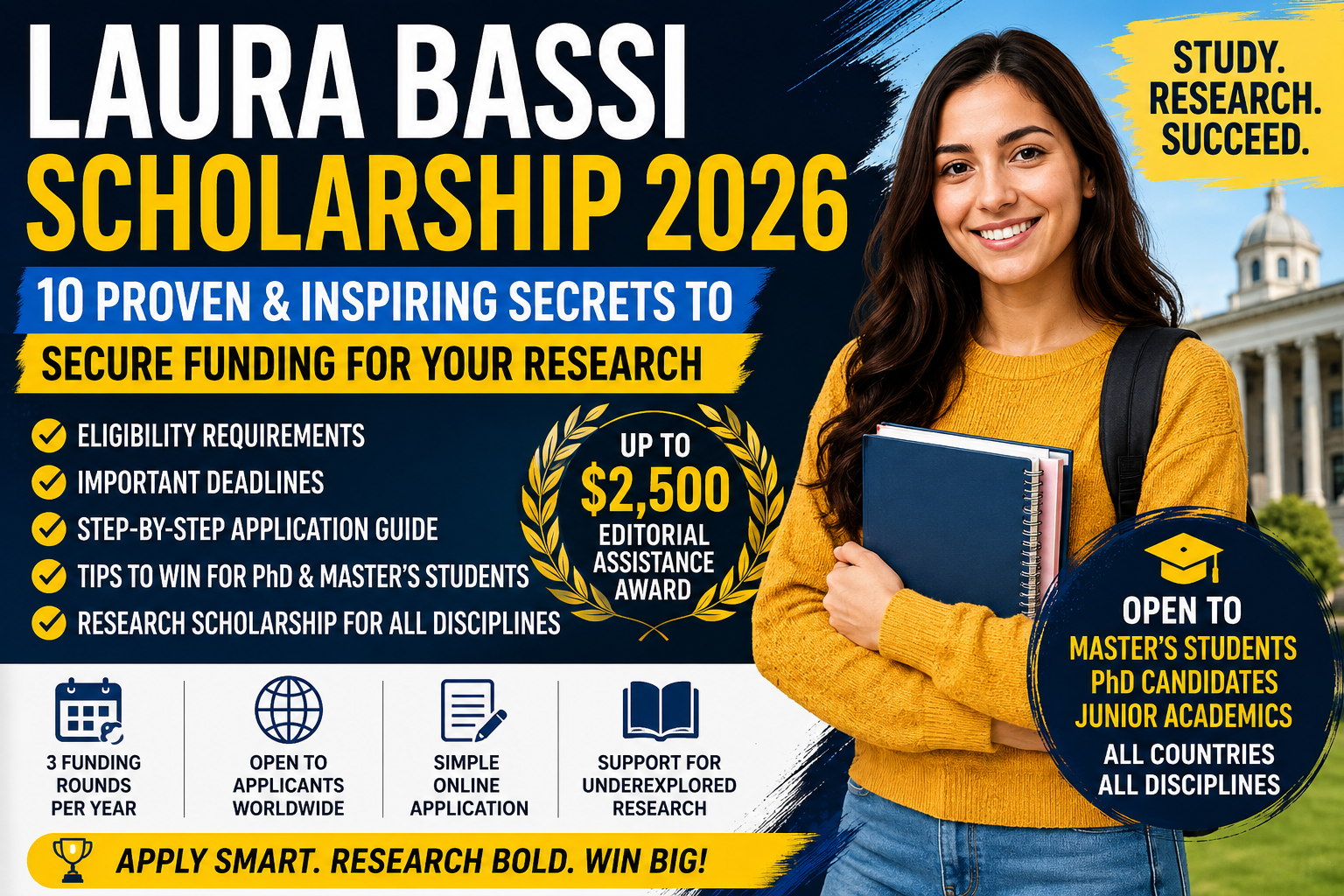
In today’s academic landscape, securing funding has become one of the most significant challenges facing researchers, postgraduate students, and early-career academics. Whether you are pursuing a master’s degree, completing a doctoral dissertation, or building your academic career, financial support can make the difference between an unfinished idea and groundbreaking research.
Among the many Research Scholarships available globally, the Laura Bassi Scholarship has emerged as a unique and highly respected opportunity. Unlike many traditional scholarships that focus solely on tuition fees or living expenses, this award provides specialized editorial assistance that helps researchers strengthen their academic work and improve publication quality.
The scholarship is particularly valuable for students working on underrepresented, overlooked, or innovative research topics. As competition for PhD Scholarships 2026 and other funding opportunities continues to grow, understanding how this scholarship works can significantly improve your chances of receiving support.
This comprehensive Laura Bassi Scholarship 2026 application guide explores everything you need to know, from eligibility requirements and deadlines to application strategies and winning tips.
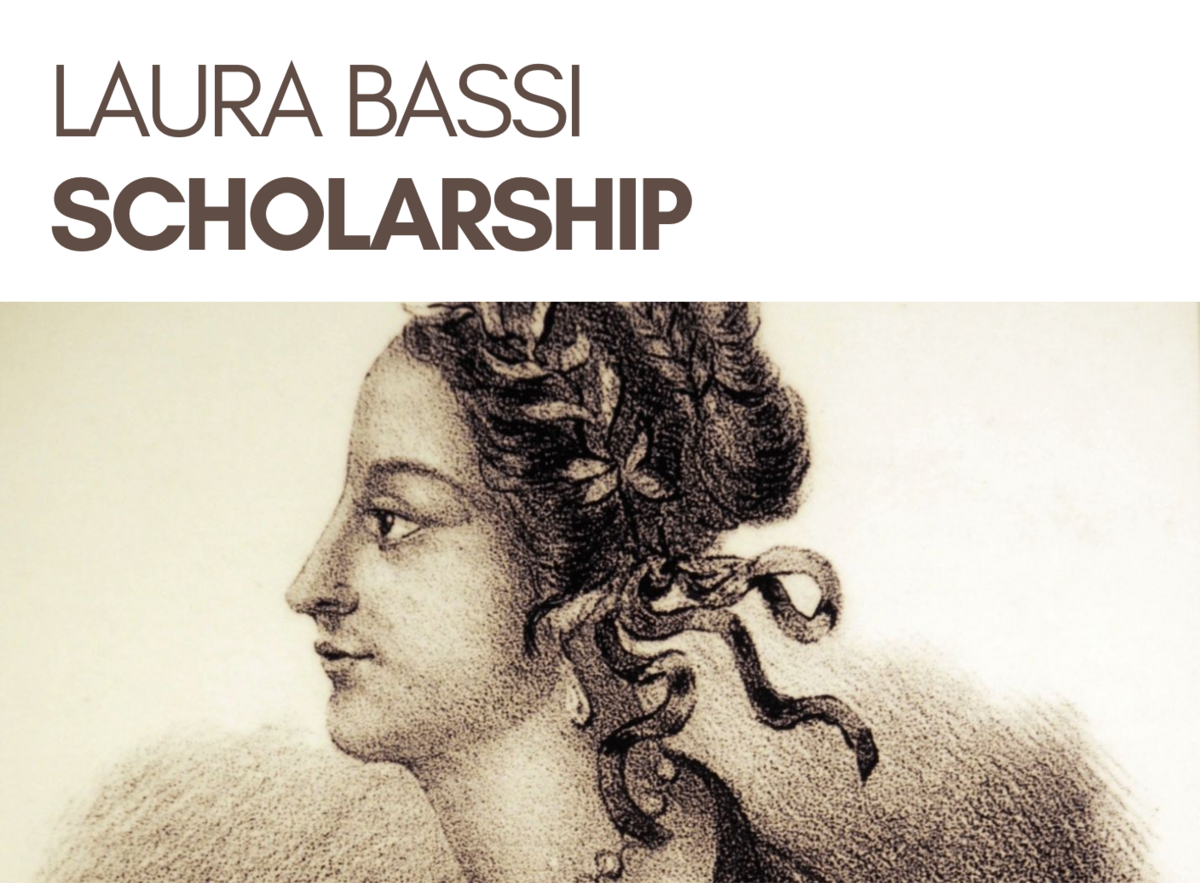
What Is the Laura Bassi Scholarship?
The Laura Bassi Scholarship was established in 2018 by Editing Press to support postgraduate students and junior academics conducting research in neglected or underexplored areas of study. The scholarship is open to applicants from all academic disciplines and countries, making it one of the most accessible international Research Scholarships available today.
Unlike conventional scholarships that provide direct financial payments, the Laura Bassi Scholarship offers editorial assistance designed to improve theses, dissertations, journal articles, and other academic publications. This support can be invaluable for researchers seeking publication, academic advancement, or stronger research outcomes.
The scholarship recognizes that many researchers possess brilliant ideas but often lack access to professional editorial support that can elevate their work to publication standards.
Why the Laura Bassi Scholarship Matters in 2026
The academic world is becoming increasingly competitive.
Researchers are now expected to:
- Publish high-quality papers
- Produce impactful dissertations
- Compete internationally
- Secure external funding
- Demonstrate research excellence
For many students, particularly international researchers and those from developing countries, accessing professional editorial services can be financially challenging.
This is where the Laura Bassi Scholarship fills an important gap.
The scholarship supports:
- Master’s students
- Doctoral candidates
- Early-career academics
- Independent researchers in qualifying categories
Its global accessibility has helped make it a highly sought-after opportunity among applicants searching for Study Abroad Scholarships, Research Scholarships, and PhD Scholarships 2026.
Laura Bassi Scholarship 2026 at a Glance
| Feature | Details |
|---|---|
| Scholarship Name | Laura Bassi Scholarship |
| Established | 2018 |
| Sponsor | Editing Press |
| Eligible Applicants | Master’s students, PhD students, Junior academics |
| Eligible Countries | All Countries |
| Academic Fields | All Disciplines |
| Scholarship Type | Editorial Assistance Funding |
| Doctoral Award Value | Up to $2,500 |
| Master’s Award Value | Up to $750 |
| Junior Academic Award Value | Up to $500 |
| Application Method | Online Application Form |
| Required Documents | CV and Application Form |
| Frequency | Three Times Per Year |
Source: Official scholarship announcements and program information.
Laura Bassi Scholarship Eligibility Requirements and Deadlines
One of the best aspects of this scholarship is its broad eligibility criteria.
Who Can Apply for the Laura Bassi Scholarship?
Applicants must belong to one of the following categories:
Master’s Students
Currently enrolled master’s candidates are eligible to apply.
Doctoral Candidates
All currently enrolled PhD students can submit applications.
Junior Academics
Academics within their first five years of full-time employment may also apply. (University of Groningen)
There are:
- No nationality restrictions
- No institutional restrictions
- No departmental restrictions
- No disciplinary restrictions
This broad inclusiveness makes it one of the most accessible Research Scholarships available internationally.
Laura Bassi Scholarship 2026 Deadlines
Applicants should pay close attention to deadlines.
| Funding Round | Application Deadline | Results Date |
|---|---|---|
| Spring 2026 | March 8, 2026 | March 20, 2026 |
| Summer 2026 | July 12, 2026 | August 24, 2026 |
| Winter 2026 | November 15, 2026 | December 4, 2026 |
Missing a deadline means waiting for the next funding cycle, so planning ahead is essential.
How to Apply for Laura Bassi Scholarship 2026
Understanding how to apply for Laura Bassi Scholarship 2026 is crucial.
The application process is relatively straightforward.
Step 1: Review Eligibility
Confirm that you fall into one of the eligible categories.
Step 2: Prepare Your CV
Your academic CV should include:
- Educational background
- Research experience
- Publications
- Conference presentations
- Awards and achievements
Step 3: Complete the Application Form
Applicants must complete the official application form available through the scholarship portal.
Step 4: Highlight Your Research Significance
The selection committee pays particular attention to research addressing:
- Underexplored topics
- Emerging fields
- Neglected areas within disciplines
- Innovative research questions
Step 5: Submit Before Deadline
Submit all required materials before the deadline.
Late submissions are generally not considered.
Laura Bassi Scholarship 2026 Application Guide: What Reviewers Look For
Many applicants mistakenly believe that excellent grades alone guarantee success.
They do not.
Reviewers often evaluate:
Research Originality
How unique is your research topic?
Academic Potential
Does your work demonstrate future impact?
Relevance
Why does your research matter?
Clarity
Can you communicate your ideas effectively?
Long-Term Contribution
Will your findings contribute meaningful knowledge?
Strong applications demonstrate both intellectual rigor and societal relevance.
10 Proven and Inspiring Secrets to Win the Laura Bassi Scholarship
Now let’s examine the strategies that can significantly improve your chances.
Secret #1: Focus on a Neglected Research Area
The scholarship was specifically created to support overlooked subjects.
Ask yourself:
- What gaps exist in your field?
- What questions remain unanswered?
- Which populations or topics receive little attention?
Researchers addressing neglected issues often stand out.
Secret #2: Demonstrate Real-World Impact
Selection committees appreciate research that extends beyond theory.
Show how your findings can:
- Influence policy
- Improve education
- Advance healthcare
- Address social challenges
- Support technological innovation
The more practical your impact, the stronger your application becomes.
Secret #3: Write a Clear Research Narrative
Many applications fail because they are difficult to understand.
Avoid unnecessary jargon.
Instead:
- Explain your topic simply
- Define complex terms
- Use concise language
- Focus on your main contribution
Clarity often beats complexity.
Secret #4: Build a Strong Academic CV
Your CV tells your academic story.
Include:
- Research projects
- Publications
- Teaching experience
- Volunteer work
- Conference participation
Even small achievements demonstrate commitment.
Secret #5: Showcase Passion for Your Research
Reviewers can often recognize genuine enthusiasm.
Explain:
- Why you chose the topic
- What motivates you
- Why the issue matters personally
Authenticity creates memorable applications.
Secret #6: Connect Your Work to Larger Academic Conversations
Strong applicants show awareness of broader debates.
Demonstrate:
- Knowledge of current literature
- Awareness of research gaps
- Understanding of emerging trends
This signals academic maturity.
Secret #7: Highlight Publication Potential
Since the scholarship provides editorial support, demonstrating publication potential can strengthen your application.
Show how the scholarship would help:
- Finalize a dissertation
- Prepare journal submissions
- Improve manuscript quality
This aligns directly with the scholarship’s objectives.
Secret #8: Submit Early
Last-minute applications often contain mistakes.
Submitting early allows time to:
- Proofread thoroughly
- Review documents
- Correct formatting issues
- Address missing information
Professionalism matters.
Secret #9: Learn from Previous Winners
Reviewing previous scholarship recipients can reveal useful patterns.
Successful applicants often demonstrate:
- Originality
- Academic excellence
- Clear communication
- Strong research purpose
Studying successful examples can provide valuable insights.
Secret #10: Present Yourself as a Future Research Leader
The committee is not simply funding a project.
They are investing in a researcher.
Demonstrate:
- Long-term goals
- Academic ambition
- Leadership potential
- Commitment to knowledge creation
Help reviewers envision your future impact.
Common Mistakes That Hurt Laura Bassi Scholarship Applications
Avoid these common errors:
Weak Research Explanation
If reviewers cannot understand your project, your chances decrease.
Generic Applications
Tailor your submission specifically to the scholarship.
Poor Formatting
Professional presentation reflects professionalism.
Missing Deadlines
Even strong applications fail if submitted late.
Overlooking Proofreading
Typos and grammatical errors create negative impressions.
Laura Bassi Scholarship vs Other Research Scholarships
| Feature | Laura Bassi Scholarship | Traditional Scholarships |
|---|---|---|
| Focus | Editorial Support | Financial Assistance |
| Eligibility | Global | Often Restricted |
| Academic Fields | All Disciplines | May Be Limited |
| Research Topic Preference | Neglected Topics | Varies |
| Funding Frequency | Three Annual Cycles | Usually Annual |
| Accessibility | High | Often Competitive |
This unique structure explains why the scholarship remains attractive among researchers seeking academic support rather than solely financial aid.
Why PhD Students Should Prioritize the Laura Bassi Scholarship in 2026
Among the available PhD Scholarships 2026, the Laura Bassi Scholarship offers several advantages:
- Global eligibility
- Multiple annual deadlines
- No disciplinary restrictions
- Valuable editorial support
- Recognition from respected academic organizations
For doctoral researchers preparing dissertations, journal submissions, or future academic careers, professional editorial assistance can be just as valuable as direct financial support.

Laura Bassi Scholarship Success Stories: Lessons from Previous Winners
One of the most effective ways to improve your chances of securing the Laura Bassi Scholarship is to learn from those who have successfully earned the award in previous years. While every research project is unique, a closer look at past recipients reveals several common characteristics that helped their applications stand out from hundreds of competing submissions.
The Laura Bassi Scholarship was established to support researchers working on neglected, underexplored, or innovative topics. According to the scholarship organizers, applications are evaluated not only on academic excellence but also on the originality and potential impact of the research being conducted. This means that understanding the qualities shared by successful applicants can provide valuable insights for future candidates seeking research funding.
What Makes Laura Bassi Scholarship Winners Different?
A common misconception among applicants is that scholarship committees only reward students with perfect grades or extensive publication records. While academic achievement is certainly important, previous Laura Bassi Scholarship recipients demonstrate that originality, relevance, and clarity often carry equal weight.
Many successful applicants have distinguished themselves through:
- Innovative research questions
- Strong commitment to solving real-world problems
- Clear communication of complex ideas
- Research in overlooked academic areas
- Demonstrated passion for their field of study
The scholarship’s official guidelines emphasize support for research that contributes new perspectives and advances knowledge in meaningful ways. This approach has allowed students from diverse disciplines and backgrounds to receive recognition and support. According to the official scholarship program, applicants from all academic fields are eligible to compete, provided their work demonstrates scholarly value and originality.
Successful Research Topics Often Address Unexplored Issues
When examining the kinds of projects that have historically aligned with the goals of the Laura Bassi Scholarship, a clear pattern emerges. Many winning proposals focus on subjects that have received limited academic attention despite their social, cultural, scientific, or economic significance.
Examples of underrepresented research areas may include:
- Gender inequality in emerging economies
- Indigenous knowledge systems
- Mental health challenges among marginalized populations
- Climate adaptation strategies in developing countries
- Educational access in underserved communities
- Ethical implications of emerging technologies
These topics share a common characteristic: they address important questions that have not yet been sufficiently explored by mainstream academic research.
The scholarship’s emphasis on supporting neglected fields reflects the legacy of the Italian scientist and academic Laura Bassi, who broke barriers in higher education during the eighteenth century and became one of the first women to achieve prominence in scientific academia.
Lesson #1: Originality Matters More Than Popularity
One of the most valuable lessons prospective applicants can learn from previous recipients is that choosing a trendy topic does not necessarily improve the likelihood of success.
In fact, scholarship reviewers often appreciate research that fills important gaps in existing literature.
For example, instead of studying a heavily researched issue, successful applicants frequently identify:
- Unanswered questions
- Underrepresented populations
- Emerging challenges
- New theoretical perspectives
Originality demonstrates intellectual curiosity and a willingness to contribute something genuinely new to the academic community.
Lesson #2: Clearly Explain Why Your Research Matters
A recurring characteristic among strong applications is the ability to connect research to broader societal or academic challenges.
Winning applicants typically answer three critical questions:
- What problem does the research address?
- Why is the issue important?
- How will the findings contribute to existing knowledge?
Reviewers may come from different academic backgrounds, making clear communication essential. Successful candidates avoid unnecessary jargon and focus on explaining the significance of their work in accessible language.
According to scholarship guidance published by the organizers, applicants should clearly articulate the value and impact of their research rather than assuming reviewers will automatically recognize its importance.
Lesson #3: Demonstrate Long-Term Research Potential
Past scholarship recipients often present themselves not only as students but as future contributors to their fields.
Strong applications commonly highlight:
- Future research goals
- Planned publications
- Conference participation
- Community engagement
- Academic career aspirations
This demonstrates that the scholarship investment will continue generating value beyond a single project.
For doctoral candidates seeking PhD Scholarships 2026, showcasing long-term academic ambition can significantly strengthen an application.
Lesson #4: Passion Creates Memorable Applications
Reviewers frequently encounter applications filled with technical details but lacking a compelling personal connection to the research topic.
Many successful Laura Bassi Scholarship recipients communicate genuine enthusiasm for their work.
They explain:
- What inspired the project
- Why the issue matters personally
- How the research could create meaningful change
Passion helps transform an application from a list of credentials into a memorable story.
Lesson #5: Strong Writing Makes a Powerful First Impression
Since the Laura Bassi Scholarship provides editorial support to researchers, the quality of an applicant’s writing naturally becomes an important factor.
Winning applications tend to be:
- Well organized
- Concise
- Error free
- Easy to understand
- Professionally presented
Even excellent research can be overlooked if it is poorly communicated. Applicants should invest time in proofreading, revising, and refining every section of their submission before applying.
Key Takeaways from Previous Laura Bassi Scholarship Winners
The experiences of successful recipients offer valuable guidance for future applicants. While no single formula guarantees success, several consistent themes emerge.
| Success Factor | Why It Matters |
|---|---|
| Original Research Topic | Demonstrates innovation and intellectual contribution |
| Clear Research Impact | Helps reviewers understand significance |
| Strong Academic Potential | Indicates future scholarly contributions |
| Effective Communication | Makes complex ideas accessible |
| Passion for Research | Creates a memorable application |
| Professional Presentation | Reflects seriousness and attention to detail |
Thoughts
Studying previous Laura Bassi Scholarship success stories reveals an encouraging reality: applicants do not need to come from elite universities or possess extraordinary publication records to compete effectively. What matters most is the ability to present meaningful, original, and impactful research clearly and compellingly.
As you prepare your application, focus on communicating the unique value of your work, highlighting its broader significance, and demonstrating your commitment to advancing knowledge within your field. By applying the lessons learned from past recipients, you can significantly strengthen your candidacy and improve your chances of securing one of the most respected international research scholarships available today.

Laura Bassi Scholarship Personal Statement and Research Proposal Writing Tips
For many applicants, the most challenging part of the Laura Bassi Scholarship 2026 application is not meeting the eligibility requirements or gathering supporting documents. The real challenge lies in presenting a compelling case for why their research deserves recognition and support.
A well-crafted personal statement and research proposal can significantly influence the selection committee’s perception of your application. While academic achievements and research experience are important, your ability to clearly communicate the value, originality, and impact of your work often determines whether your application stands out from the competition.
If you are searching for practical advice on how to apply for Laura Bassi Scholarship 2026, mastering the art of writing a persuasive personal statement and research proposal should be one of your top priorities.
Why Your Personal Statement Matters for the Laura Bassi Scholarship
The personal statement is your opportunity to introduce yourself beyond grades, publications, and academic credentials. It allows reviewers to understand your motivations, aspirations, and commitment to your research field.
A strong personal statement helps answer important questions such as:
- Why did you choose your research topic?
- What inspired your academic journey?
- Why is your work important?
- How will the scholarship support your goals?
- What impact do you hope to make through your research?
The Laura Bassi Scholarship was established to support researchers pursuing meaningful and often underrepresented areas of study. Therefore, your personal statement should demonstrate both intellectual curiosity and a genuine passion for advancing knowledge.
What the Selection Committee Wants to See
Based on the scholarship’s stated objectives and evaluation criteria, reviewers generally look for applicants who demonstrate:
- Original thinking
- Research excellence
- Clear communication skills
- Strong academic potential
- Commitment to addressing important issues
- Passion for their field of study
The committee is not simply evaluating a project; they are assessing the researcher behind it. Your personal statement should therefore present a convincing picture of who you are as a scholar and why your work deserves support.
How to Structure a Winning Laura Bassi Scholarship Personal Statement
A clear structure makes your statement easier to read and more persuasive.
1. Start with a Powerful Introduction
The opening paragraph should immediately capture attention.
Rather than beginning with generic statements, explain what sparked your interest in your research area.
For example:
- A personal experience
- An academic discovery
- A societal problem
- A gap in existing research
A compelling introduction establishes an emotional and intellectual connection with the reader.
2. Explain Your Academic Journey
After introducing your research interests, briefly discuss your educational background.
Highlight:
- Relevant degrees
- Research experience
- Academic achievements
- Publications or presentations
- Professional experiences related to your field
Focus on experiences that directly support your current research goals.
3. Describe Your Research Interests
This section should explain:
- What you are studying
- Why it matters
- What gap your research addresses
- How your work contributes to the field
Keep your explanations accessible. Remember that reviewers may not be specialists in your exact discipline.
4. Connect Your Goals to the Laura Bassi Scholarship
One of the most common mistakes applicants make is failing to explain why they specifically need this scholarship.
Clearly describe:
- How the scholarship will help your research
- Why editorial assistance is valuable
- What outcomes you hope to achieve
- How the funding aligns with your academic objectives
A direct connection between your goals and the scholarship’s purpose demonstrates thoughtful preparation.
5. End with a Strong Conclusion
Conclude by reaffirming:
- Your commitment to research
- The significance of your project
- Your future aspirations
- Your appreciation for the opportunity
A confident and forward-looking conclusion leaves a lasting impression.
Laura Bassi Scholarship Research Proposal Writing Tips
While the personal statement focuses on you as a researcher, the research proposal focuses on the project itself.
A successful proposal should convince reviewers that your research is:
- Important
- Original
- Feasible
- Well-planned
- Worth supporting
Essential Components of a Strong Research Proposal
Research Title
Choose a concise and descriptive title.
A good title should immediately communicate the focus of your study.
Research Background
Provide context for your research.
Discuss:
- Existing literature
- Current challenges
- Knowledge gaps
- Why further investigation is needed
According to the official scholarship guidelines, research that addresses neglected or underexplored areas is particularly encouraged.
Research Problem
Clearly define the issue your study seeks to address.
Avoid vague descriptions.
Instead, specify:
- What problem exists
- Why it matters
- Who is affected
A clearly defined problem demonstrates academic rigor.
Research Objectives
Outline the specific goals of your study.
Examples include:
- Investigating a phenomenon
- Testing a theory
- Evaluating a policy
- Developing a new framework
Objectives should be realistic and measurable.
Research Methodology
Explain how you will conduct the research.
Include:
- Data collection methods
- Sampling strategies
- Analytical approaches
- Research tools
Reviewers want evidence that your project is practical and achievable.
Expected Outcomes
Discuss what you hope to discover or achieve.
Potential outcomes may include:
- New insights
- Policy recommendations
- Theoretical contributions
- Practical solutions
Showing clear outcomes helps reviewers understand the value of your work.
Common Mistakes That Weaken Laura Bassi Scholarship Applications
Even strong candidates can undermine their applications through avoidable mistakes.
Using Excessive Academic Jargon
Complex language does not necessarily make an application stronger.
In many cases, it makes proposals harder to understand.
Focus on clarity rather than complexity.
Failing to Demonstrate Research Impact
Many applicants explain what they are studying but fail to explain why it matters.
Always connect your research to broader academic, social, economic, or policy implications.
Submitting Generic Statements
Avoid copying content from previous scholarship applications.
Each submission should be tailored specifically to the Laura Bassi Scholarship.
Ignoring Proofreading
Grammar mistakes, formatting issues, and typographical errors can create a negative impression.
Before submitting:
- Proofread multiple times
- Use grammar-checking tools
- Ask colleagues or mentors for feedback
Overlooking the Scholarship’s Mission
The Laura Bassi Scholarship specifically supports meaningful and often underrepresented research areas.
Applications that fail to demonstrate originality or significance may struggle to compete successfully.
Example Framework for a Strong Research Proposal
| Section | Purpose |
|---|---|
| Research Title | Clearly identifies the topic |
| Background | Provides context and literature overview |
| Research Problem | Defines the issue being investigated |
| Objectives | States the study’s goals |
| Methodology | Explains how the research will be conducted |
| Expected Outcomes | Highlights anticipated contributions |
| Scholarship Relevance | Demonstrates alignment with Laura Bassi Scholarship goals |
Expert Tips to Win the Laura Bassi Scholarship for PhD Students
Doctoral candidates often face intense competition when applying for PhD Scholarships 2026. To improve your chances:
- Emphasize originality over popularity.
- Highlight gaps in existing research.
- Demonstrate publication potential.
- Clearly explain societal relevance.
- Show long-term academic commitment.
- Align your proposal with the scholarship’s mission.
- Present a realistic and achievable research plan.
Remember that reviewers are looking for projects capable of making meaningful contributions to knowledge and society.
Thoughts
Writing a strong personal statement and research proposal is one of the most important steps in the Laura Bassi Scholarship 2026 application guide. While academic achievements provide the foundation of a competitive application, your ability to communicate your vision, passion, and research impact ultimately determines how reviewers perceive your candidacy.
The most successful applicants combine originality, clarity, and purpose. They clearly explain why their research matters, how it contributes to their field, and how the Laura Bassi Scholarship will help them achieve their academic goals.
By investing time in crafting a thoughtful personal statement and a well-structured research proposal, you can significantly strengthen your application and increase your chances of securing one of the most respected Research Scholarships available to postgraduate researchers today.
For more information, visit:
- Editing Press. Laura Bassi Scholarship Program Overview. Available at: https://editing.press/bassi
- Editing Press. Scholarship Eligibility and Selection Information. Available at: https://editing.press/bassi
- Encyclopaedia Britannica. Laura Bassi Biography. Available at: https://www.britannica.com/biography/Laura-Bassi
Final Thoughts on the Laura Bassi Scholarship 2026
The Laura Bassi Scholarship 2026 represents far more than a funding opportunity. It is an investment in researchers whose work challenges conventional thinking, explores overlooked issues, and contributes meaningful knowledge to society.
In an academic environment where competition for funding continues to intensify, this scholarship offers something uniquely valuable: professional editorial assistance designed to strengthen research quality and increase scholarly impact.
For master’s students, doctoral candidates, and early-career academics, the opportunity is well worth pursuing. The application process is accessible, the eligibility criteria are broad, and the potential benefits extend far beyond the immediate award itself.
If you are conducting research that deserves greater visibility, now is the time to prepare your application, refine your research narrative, and submit a compelling proposal.
The next breakthrough in your academic journey could begin with a single application to the Laura Bassi Scholarship. By understanding the Laura Bassi Scholarship eligibility requirements and deadlines, following this Laura Bassi Scholarship 2026 application guide, and applying the tips to win the Laura Bassi Scholarship for PhD students outlined above, you can significantly improve your chances of joining the growing community of successful recipients.
Leave a Reply